Skip to content

From promise
to proof

Wind propulsion provides a practical route to lower-carbon shipping through measurable, predictable reductions that do not depend on carbon offsets. We measure that impact in tonnes of CO₂e directly avoided, backed by independent validation and an assessment of our vessels’ environmental footprint. Our operational experience also helps advance the industry’s measurement standards. In April 2026, we presented four years of operational experience with Canopée to the International Maritime Organization in London.

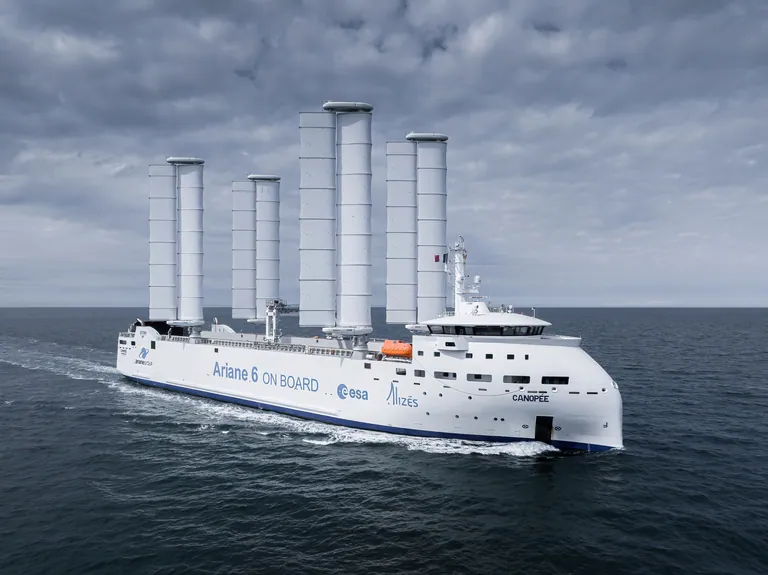
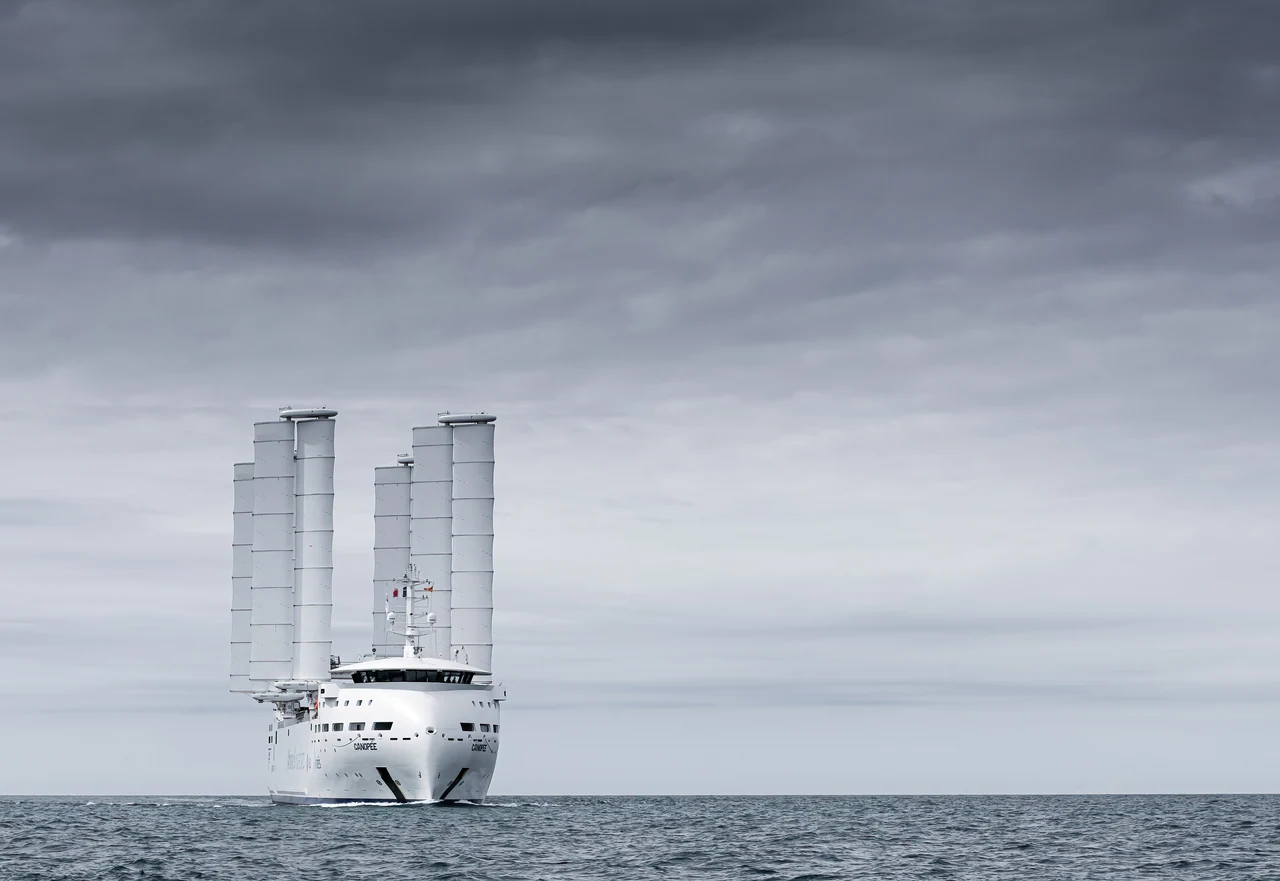
The wind-assisted cargo ship Canopée at sea, its four wings deployed, under a grey sky

Our impact, measured
and audited

Block 1 of 4

Using the right performance metrics

The right metric is neither the percentage of sail utilisation nor the absolute reduction in fuel consumption. It is the amount of CO₂ emitted per metric tonne transported and per kilometre sailed. A wind-assisted vessel consumes less fuel, but that raw figure says nothing about its actual carbon footprint compared with other vessels operating on the same routes. When a small wind-assisted cargo vessel is compared with a 15,000 TEU container ship, whose fuel consumption per unit transported benefits from considerable economies of scale, its carbon performance may prove less favourable. This is why emissions per tonne-kilometre provide the only rigorous basis for honest comparisons across vessels, routes and propulsion technologies.
Block 2 of 4

Choosing the right benchmarks

The metric alone is not enough. A recognised benchmark is also needed for comparison. Data published by some national organisations quickly become outdated in a rapidly changing industry.

We rely on data from the Clean Cargo Working Group, published annually by the Smart Freight Centre. This report aggregates third-party-verified operational data from 18 shipping companies representing more than 88% of global container freight capacity. It covers the full spectrum of emissions (CO₂, methane, nitrous oxide and other greenhouse gases) using a Well-to-Wake approach, from the oil well to the vessel’s wake. The data are differentiated by shipping route, enabling precise comparisons between vessels operating on the same services.

Block 3 of 4

Having our figures independently validated

Our emissions-calculation methodology underwent an independent critical review by EY, based on our calculation files and methodology report. The safety margins applied are deliberately conservative: our actual performance is likely higher than what we report.

Our technical performance also underwent independent due diligence by Bureau Veritas Solutions Marine & Offshore at the request of our financiers. Bureau Veritas assessed our vessel designs, energy efficiency and compatibility with the targeted routes and ports, using its own hydrodynamic and aerodynamic calculations.

Block 4 of 4

Measuring impact beyond CO₂

Reducing operational CO₂ emissions is the primary objective of wind propulsion. But CO₂ emissions are not a vessel’s only environmental impact. Raw-material extraction, construction, the use of solvent-based paints, maintenance, underwater noise pollution, end-of-life treatment: every stage of a vessel’s life generates impacts, sometimes on the biosphere, sometimes through water eutrophication, sometimes on the ozone layer.

Focusing solely on greenhouse gas emissions means overlooking other essential aspects of a vessel’s environmental footprint. This is why, together with EVEA and with the support of ADEME, we are conducting a comprehensive Life Cycle Assessment of the Windcoop vessel and our future vessels.

This approach is more demanding than a simple CO₂-emissions calculation, but it is the only methodology that covers all of a vessel’s environmental impacts throughout its entire lifecycle.

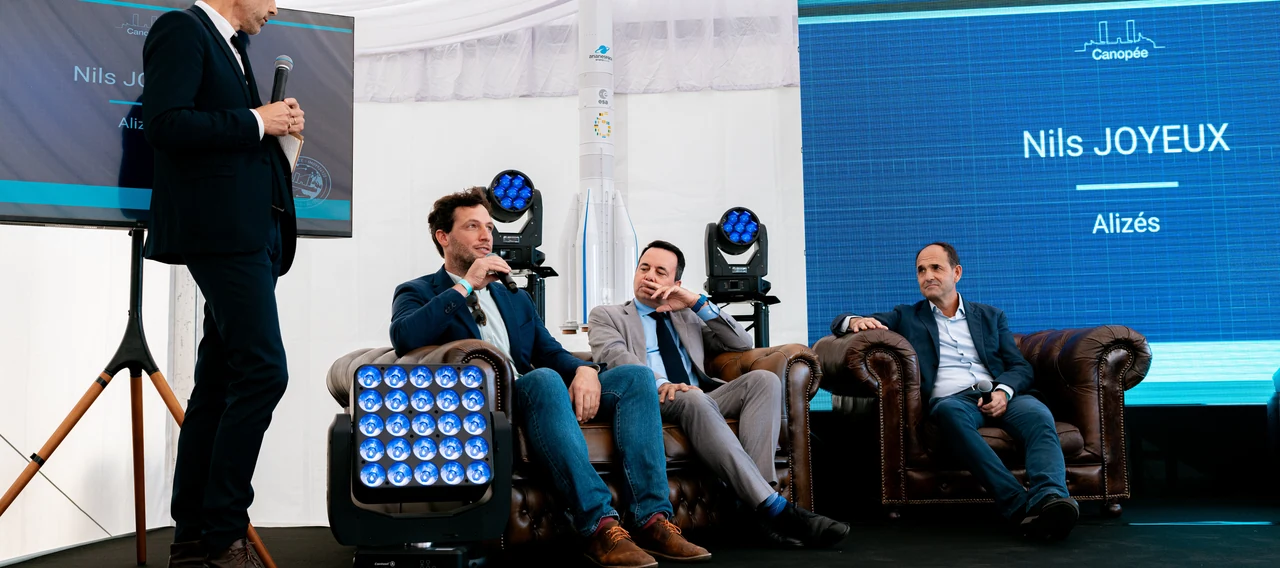
Nils Joyeux, co-founder of Zéphyr & Borée, on stage at a panel discussion alongside two other speakers

Our contribution to
reshaping the
industry

Block 1 of 2

A common methodology for the industry

Emissions figures only carry weight if the methods behind them are shared and recognised across the sector. Together with Windship, we initiated a standardisation process with AFNOR, bringing together around 15 stakeholders from the French wind-propulsion sector: shipowners, equipment suppliers, certification bodies, energy companies and consulting firms. The objective is to create a standardised framework for assessing the contribution of sails to emissions reductions that can be used in charter agreements.

Our contribution proposes a precise experimental standard: a rigorous definition of the wind-propulsion share, a route-simulation methodology based on five years of weather data and consistency requirements across models. This work forms part of a chain of frameworks extending from Clean Cargo and the GLEC Framework to ISO 14083.

Block 2 of 2

Contributing to the research and debates that matter

In February 2026, Simon Delvoye, an engineer at Zéphyr & Borée, co-authored a study published in the proceedings of the Wind Propulsion conference organised by RINA in London, in collaboration with RISE Research Institutes of Sweden and Becker Marine Systems. The study examines the selection of hydrodynamic appendages for vessels using wind as their primary means of propulsion.

In April 2026, our co-founder Nils Joyeux presented four years of operational experience with Canopée to the International Maritime Organization (IMO) in London, alongside Simon Watin of VPLP. The presentation covered the vessel’s behaviour in storms, schedule reliability, return on investment, crew training and actual fuel savings. The message to the committee was that wind propulsion is operationally and financially viable, and that industrial-scale deployment requires a stable regulatory framework.


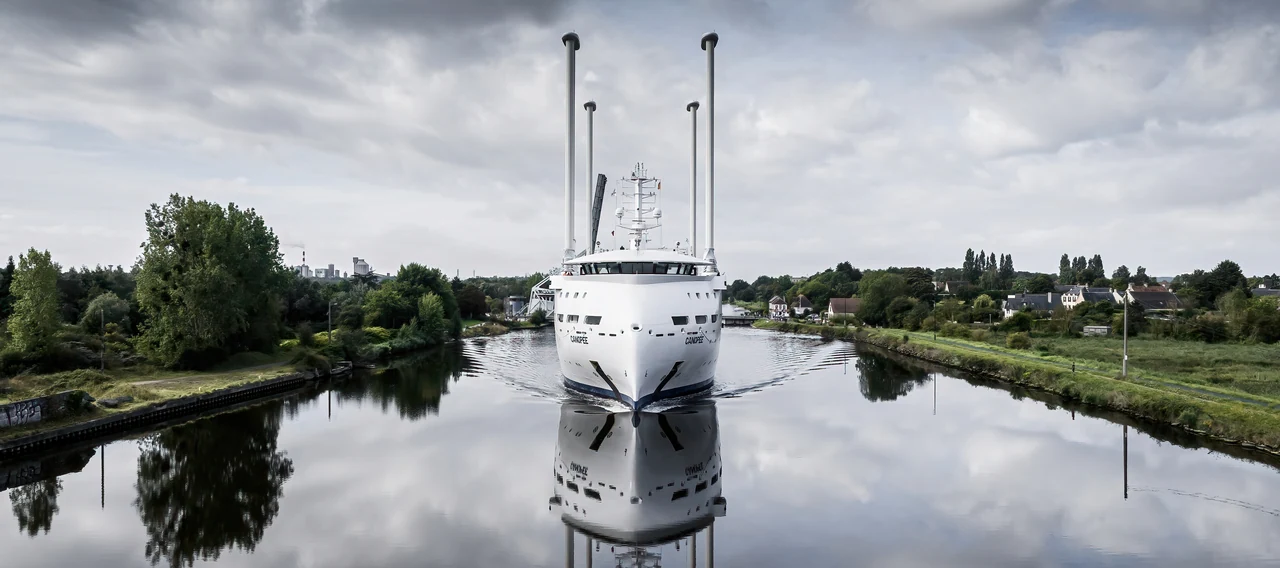
Canopée sails up a tree-lined canal, its wings deployed

The industry
trusts us

Commissioned studies

Public institutions, ports and financing organisations commission us to conduct studies on the decarbonisation of maritime transport through wind propulsion.

The Brittany Region commissioned us to assess the conditions required for a modal shift towards wind-powered coastal shipping. The Grand Port Maritime de Bordeaux, as part of the H2 Bordeaux programme supported by the European Commission, selected us to conduct a pre-feasibility study on converting a vessel to hybrid propulsion incorporating rigid wings. Windship and Aquitania Ports Link selected us to conduct a techno-economic study on the conditions required to accommodate wind-powered coastal shipping at the ports of Bayonne, Bordeaux, La Rochelle and Rochefort, as part of the CEE REMOVE programme.

Awards and recognition

Canopée was named Vessel of the Year 2024 at the Marine Propulsion Maritime Decarbonisation Awards in Amsterdam. That same year, SCLCMT, the coalition of industrial shippers behind Macareux, received the Maritime Energy Transition Award, presented jointly by the Académie de marine and SOPER.

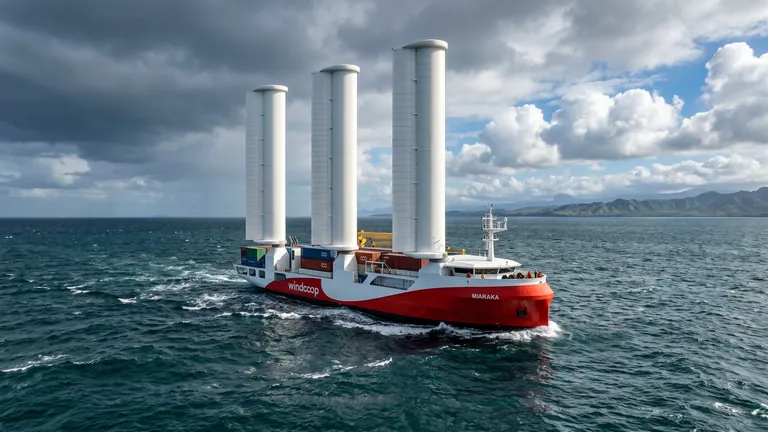
In June 2026, Windcoop won the Sustainable Ship Design Award at the Breakbulk Green World Awards during Breakbulk Europe in Rotterdam, the world’s largest gathering for project cargo and breakbulk. The jury recognised the design of Miaraka, the world’s first wind-assisted container ship, ahead of international shipyards and shipowners.

Looking to decarbonise
your shipping? Let’s talk.

Contact us