Stabilise your costs.
Secure your operations.
Reduce your emissions.
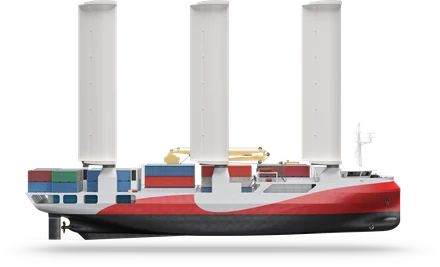
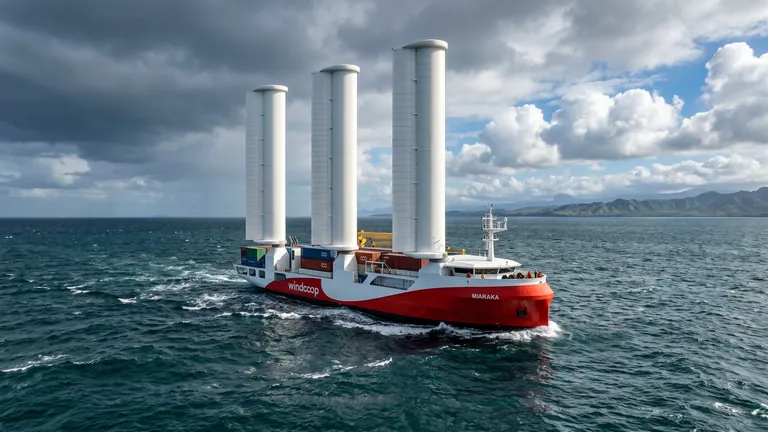
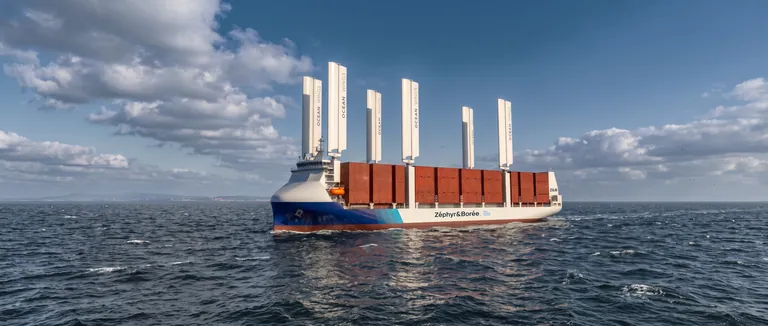
As an integrated shipowner, we design, finance and operate wind-assisted cargo vessels to decarbonise maritime supply chains. We serve industrial shippers requiring dedicated vessels, as well as shipping lines seeking lower-carbon tonnage under time charter to supplement their carrying capacity.

Time-chartered vessels
Do your logistics require a dedicated vessel?
Charter a fully equipped and crewed wind-assisted cargo vessel tailored to your industrial cargo flows. You run your supply chain; we run the ship.
A solution built around your critical cargo flows
Specialists in heavy and oversized cargo, we design tailor-made vessels for your import and export flows. Based on your specifications, we assess your routes, port constraints, cargo requirements and regulatory exposure to develop the vessel best suited to your operations. Integrated wind propulsion reduces operating costs and Scope 3 emissions without compromising operational reliability.
Wind-assisted tonnage provision
Looking to add wind-assisted vessels to your fleet without taking on the upfront CAPEX?
We design and finance a custom wind-assisted vessel to match your specific requirements. We act as the shipowner, while you remain the commercial line operator.
A solution for deploying wind propulsion on your routes
Are you looking to renew your fleet, prepare for tighter regulation or adopt wind propulsion without bearing the financial and technological risk alone? Our model gives you access to bespoke vessels (container ships, multipurpose vessels and Ro-Ro ships) equipped with the propulsion system best suited to your operating profile. Our remuneration model is indexed to the verified performance of the sails. This approach reduces your regulatory exposure under the EU ETS and FuelEU Maritime while delivering greater long-term stability in operating costs.

Our integrated expertise
From early-stage de-risking studies to commercial operation, we bring together the technical, financial and operational capabilities required to make wind propulsion a reliable and bankable industrial solution. Managing these capabilities within one organisation reduces integration risk, avoids fragmented responsibility and safeguards long-term project performance.
-
Ensuring project viability before capital investment
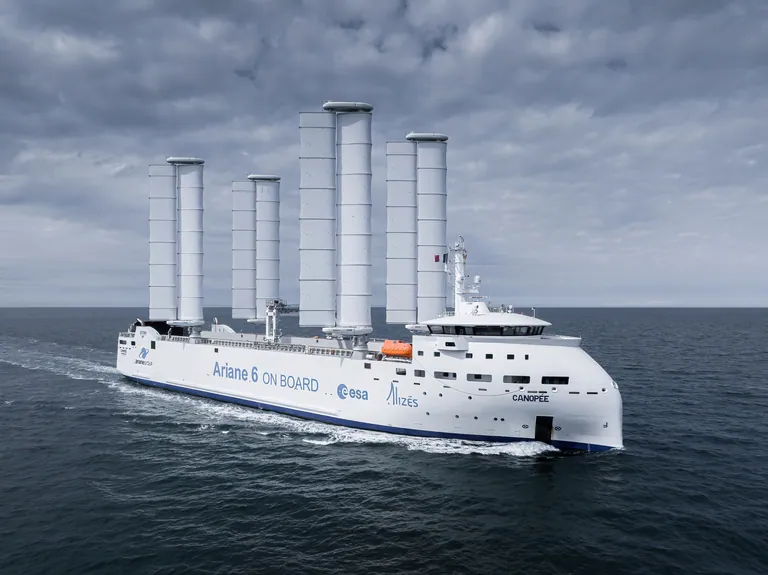
Based on your operational requirements, we analyse your shipping routes, logistics constraints, vessel parameters, financial targets and the regulatory framework to rapidly assess your project’s potential. Deliverables include a preliminary P&L, weather-routing simulations, Total Cost of Ownership and ROI analysis. We also assess compatibility with your existing supply chains and establish a pathway for energy savings and verified emissions reductions. This early-stage de-risking capability provides a clear view of the commercial and environmental case before committing to the longer and more costly detailed-design phase. This methodology draws on in-service commercial operating experience with Canopée, the world’s first industrial wind-assisted cargo vessel.
-
Making the project bankable
We structure and secure the full financing of our assets. Backed by our shareholder MGH Energy, an investment fund owned by Jean-Michel Germa, and a pool of longstanding banking partners, we implement specialised financial structures tailored to this specific asset class, including bank debt, equity, French tax lease financing and subsidies. This financial engineering allows us to minimise the impact of the additional CAPEX associated with wind-assisted propulsion.
-
Designing the right vessel for your needs while preserving its charter and resale value
We develop the naval architecture of bespoke vessels around your operating profile. By analysing service speed, cargo characteristics, port constraints and route-specific wind statistics, we identify the most suitable wind propulsion systems and develop the most efficient design. Independent of equipment suppliers, we assess each technology without bias and select the one best suited to your route, whether rigid wings, Flettner rotors or soft sails. We avoid over-specialisation to preserve flexibility, broad appeal in the charter and resale markets, and residual value beyond the vessel’s initial service. Every project targets the right balance between economic performance, operational reliability and decarbonisation.
-
Operating vessels, measuring and optimising their performance
From shipyard construction supervision and sea trials to commissioning and long-term operation, we manage vessel mobilisation, voyage planning, preventive and corrective maintenance, crew recruitment and training in the operation of wind propulsion systems. Dedicated weather-routing tools and optimised sail deployment help maximise fuel savings. Each voyage generates traceable fuel-consumption and emissions-reduction data that can support carbon reporting, whether Scope 1 for your direct emissions or Scope 3 for emissions across your value chain. Our commercial operating experience with wind-assisted cargo vessels dates back to Canopée’s entry into service in 2022, giving us expertise that few operators worldwide possess today.
From initial discussion
to commercial operations
-
Client You define your operational requirements: shipping route, target vessel dimensions, cargo type, and service frequency.
-
Z&B A focused preliminary assessment to validate or refine the technical and financial assumptions before committing major engineering resources.
-
Client An agreement in principle covering the target charter rate and agreed environmental performance targets, providing the commercial framework for detailed engineering and financing discussions.
-
Z&B Approximately four months of concept design, leading to a firm commercial offer covering the charter rate and agreed vessel performance parameters.
-
Client The long-term charter commitment provides the bankable revenue basis required to close project financing and proceed to implementation.
-
Z&B Finalisation of the financial structure and selection of the shipyard based on the best balance of quality, delivery schedule, and capital cost.
-
Z&B End-to-end management, from shipyard construction supervision to long-term vessel operations, providing verified fuel-consumption and emissions-reduction data for carbon reporting.